 Gravel2Gavel Construction & Real Estate Law Blog





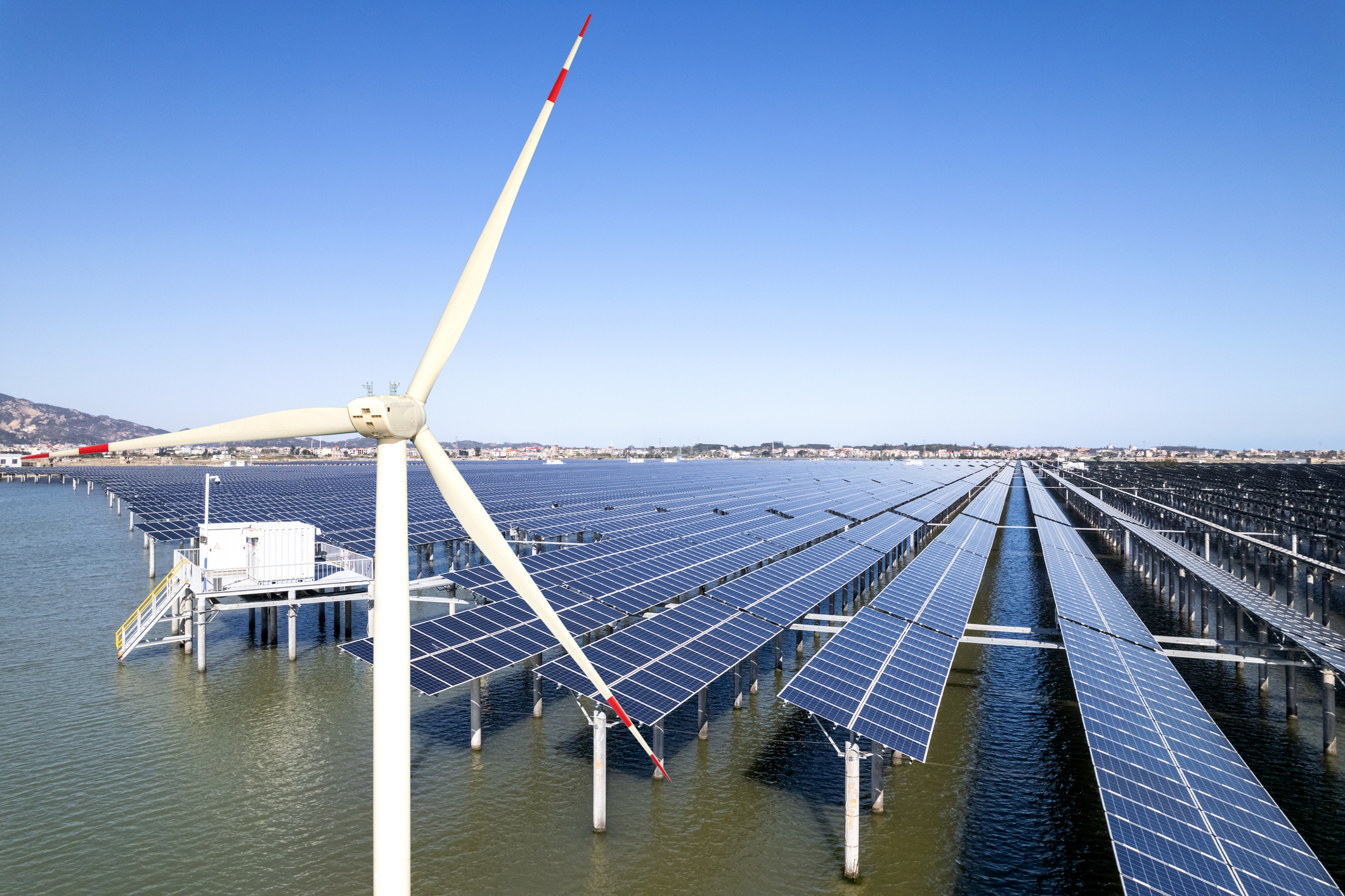 Recent executive actions and federal guidance have targeted wind and solar development, creating substantial uncertainty for the U.S. offshore wind industry and also reshaping the regulatory landscape governing onshore wind and solar development. Wind and solar projects on federal lands are now subject to heightened review processes and enhanced regulatory scrutiny. As a result, many developers are considering opportunities on state-owned and privately held lands rather than federal lands.
2025 Federal Executive Actions Impacting Wind and Solar
At the federal level, renewable energy development on public lands is governed primarily by the Federal Land Policy and Management Act and administered by the Bureau of Land Management. The agency provides rights of way and leases (in designated leasing areas) for energy project development. Despite significant incentives for renewable energy development under the Biden administration, the Trump administration has deprioritized renewable energy in support of traditional energy sources like oil, gas and coal, as well as nuclear and geothermal energy.
On his first day in office, President Donald Trump issued Executive Order (EO) 14154, “Unleashing American Energy,” advocating for American leadership in energy production. In his subsequent Presidential Memorandum, President Trump directed a full review of wind leasing and permitting practices, including pausing “approvals, rights of way, permits, leases, or loans for onshore or offshore wind projects” until the completion of a comprehensive assessment of wind leasing and permitting practices.
On July 7, 2025, the President followed his prior order with EO 14315, “Ending Market Distorting Subsidies for Unreliable, Foreign Controlled Energy Sources.” This EO seeks to expedite the implementation of the One Big Beautiful Bill Act (OBBBA), which limited the availability of clean energy tax credits by imposing new deadlines and compliance standards for projects in development. Under the OBBBA, projects eligible for tax credits were required to have begun construction by July 4, 2026, or be in service by December 2027. EO 14315 also charged the Treasury Department with determining what constitutes “under construction.” In August, the Treasury Department determined that, for eligibility purposes, construction of a wind or solar facility “begins when physical work of a significant nature begins.” This physical work test is a departure from the previous threshold that required only five percent of project expenditures to have been obligated for a project to have been eligible for tax credits.
Federal Administrative Actions Affecting Wind and Solar
In conjunction with President Trump’s EOs, the Department of the Interior (DOI) recently issued policy guidance and Secretary’s Orders (SOs) that increase the level of federal government scrutiny of wind and solar projects. On July 17, 2025, the DOI issued a policy directive that requires all DOI decisions involving wind and solar projects—including leases, rights-of-way, construction and operation plans, and related environmental reviews—receive review by the Office of the Deputy Secretary and final review elevated to the Office of the Secretary. The directive requires that reviews once handled by lower DOI levels must now be approved by top agency officials under unclear timelines.
Interior Secretary Doug Burgum has also issued two SOs that reflect the Trump administration’s stance toward wind and solar. In SO 3437, the DOI is required to identify and remove any preferential treatment toward wind and solar in its regulations, guidance, policy or practice. Under SO 3438, the DOI must manage federally controlled lands in a manner that optimizes projects with the highest capacity densities, in megawatts per acre. Capacity density reflects the amount of electricity a project generates given the acreage of the proposed project area. Appendix 1 of SO 3438 also lists the capacity density of various energy types. This chart ranks wind and solar as having the lowest capacity density. The result of this change is that wind and solar projects will be deprioritized due to the land sprawl required for wind and solar plants to generate power.
On December 22, 2025, less than two weeks after U.S. District Judge Saris (D. Mass.) issued an order vacating President Trump’s offshore wind order of January 20, 2025, the DOI announced the pause of five offshore wind projects which are in varying stages of construction off the East Coast. The DOI cited national security risks and radar interference as the primary reasons for the pause, indicating that further evaluation of the risks was necessary. A flurry of litigation followed the DOI’s announced pause, with federal judges reversing in three out of three cases decided to date. Notwithstanding the litigation and court orders impacting renewable energy projects under federal jurisdiction, the renewable energy industry is increasingly considering other development options.
Potential Alternative Pathways: State and Private Lands
Taken together, these policy changes and litigation headwinds introduce a significant level of uncertainty for wind and solar development. The permitting and review processes are unclear and, the timeline for approval is undetermined. In response, developers may consider shifting focus toward state-owned and private lands for wind and solar leasing.
Private Lands
Renewable energy development on private lands typically involves negotiation of ground lease agreements with private landowners. For largescale projects, developers typically enter into ground leases with owners of vacant or agricultural land, which secures the right to build and maintain the project for a long period of time. These leases, which are often for terms of up to 40 years, are mutually beneficial for both developers and landowners because they provide developers with long-term siting for wind and solar developments, while landowners receive consistent income from their vacant or unused land for extended periods.
For largescale developments, many leases are often required from various neighboring landowners. Though leases are the primary vehicle for renewable energy development on private lands, developers may also obtain land development rights through easements or by purchasing fee simple title to properties.
Additionally, renewable energy tenants should conduct thorough due diligence regarding potential third-party rights to use or occupy the relevant property. Environmental due diligence with an environmental site assessment and permitting review is prudent, as well. The existence of any surface or subsurface rights on privately owned properties, like mineral rights and access easements, may interfere with project development or even halt projects. Conservation easements, for example, may restrict the possible surface uses on encumbered properties. Certain existing interests may require consents from relevant third parties, as in the case of mortgages, or cooperation agreements, as in the case of mineral and water rights. A well-developed negotiating strategy can help developers avoid pitfalls as well. Legal assistance may be required for diligence and negotiation of lease agreements and any third-party agreements.
State Lands
State-owned lands, such as state land trusts and former industrial sites, are also available for wind and solar development sites and may present fewer burdens and more administrative predictability than federal lands. There are various kinds of state-owned lands that may be leased for renewable energy development, with variability state-by-state.
Several states in the Western United States manage large tracts of trust lands that can be leased for wind and solar development, which generates income for public benefit. These lands, which present the strongest opportunity for commercial-scale wind facilities, are governed by state constitutional or statutory fiduciary duties to generate sustainable revenue for public beneficiaries such as schools and universities. State trust lands are often intermixed with private lands and federally owned lands. For example, the New Mexico State Land Office manages about nine million acres for commercial leasing, including renewable energy. State trust lands are also often intermixed with private lands and federally owned lands, and while some states have adopted streamlined permitting frameworks to attract investment in these lands, others impose extensive environmental review requirements.
State conservation lands, which are primarily held for conservation and recreation purposes, may also be utilized for wind and solar leases. These lands are often state forests, nature preserves, wildlife refuges and game lands; however, some states extend their definition of the primary conservation purpose to include renewable energy projects.
Other bodies of state government may also hold lands for public safety, general services, transportation, National Guard or education purposes. These lands may be suitable for renewable energy facilities, depending on the state.
For example, in California, the California State Lands Commission provides numerous opportunities for renewable energy development leasing. The Commission issues leases for offshore renewable energy developments in state waters. The commission also owns over 340,000 acres of desert lands with potential for renewable energy development, though they are largely not contiguous, which makes development challenging. Other states that lease state lands for renewable energy projects include: Alaska, Arizona, Colorado, Hawaii, Idaho, Maine, Montana, Nebraska, New Jersey, New Mexico, Oklahoma, South Dakota, Texas, Utah, Washington and Wyoming.
Laws and Regulations Applicable to Renewable Energy Developments on State- or Privately Owned Land
Though it may be more feasible for renewable energy developers to site projects on state- and privately owned lands under the current presidential administration, developers should be aware that federal requirements will likely still be applicable for some aspects of the projects. The level of federal involvement in renewable energy permitting varies from state to state. The Department of Energy has prepared a state-by-state catalog of siting policies and permitting requirements, which provides a comprehensive overview of which law might be applicable in each state.
States where the primary authority for solar and wind project siting is local or state government include Alabama, Delaware, Georgia, Hawaii, Illinois, Indiana, Kansas, Missouri, Maryland, Montana, New Jersey, Nebraska, Pennsylvania, Utah, Texas, West Virginia and Puerto Rico. States where both state and federal law apply include Alaska, Colorado, Idaho, Maine, Oklahoma and Vermont. For the rest of the states, whether state or federal law applies is contingent on variables like project size, and both state and federal law may apply in many circumstances.
Federal requirements may also come into play when there is a federal “hook,” or a nexus to federal authority that triggers the application of federal permitting requirements when it would not ordinarily be required. For example, projects that cross federal lands for transmission or access may trigger review under the National Environmental Policy Act. Projects that result in incidental harm to listed species may require authorization under the Endangered Species Act. Activities affecting jurisdictional waters may necessitate a Clean Water Act § 404 permit from the U.S. Army Corps of Engineers. Finally, projects that rely on federal loan guarantees may still necessitate federal review—even for projects sited entirely on private land.
Conclusion
Recent federal executive actions related to wind and solar development represent a pivotal moment for U.S. clean energy policy. The near‑term effect will likely entail a contraction in wind and solar development opportunities on federal land. Developers may increasingly rely on state and private land pathways, which bring their own legal and logistical hurdles. The long‑term trajectory will depend in part on how federal agencies implement review processes. For now, wind and solar development in the United States will continue to face one of its most uncertain policy landscapes in history.
RELATED ARTICLES