 Gravel2Gavel Construction & Real Estate Law Blog


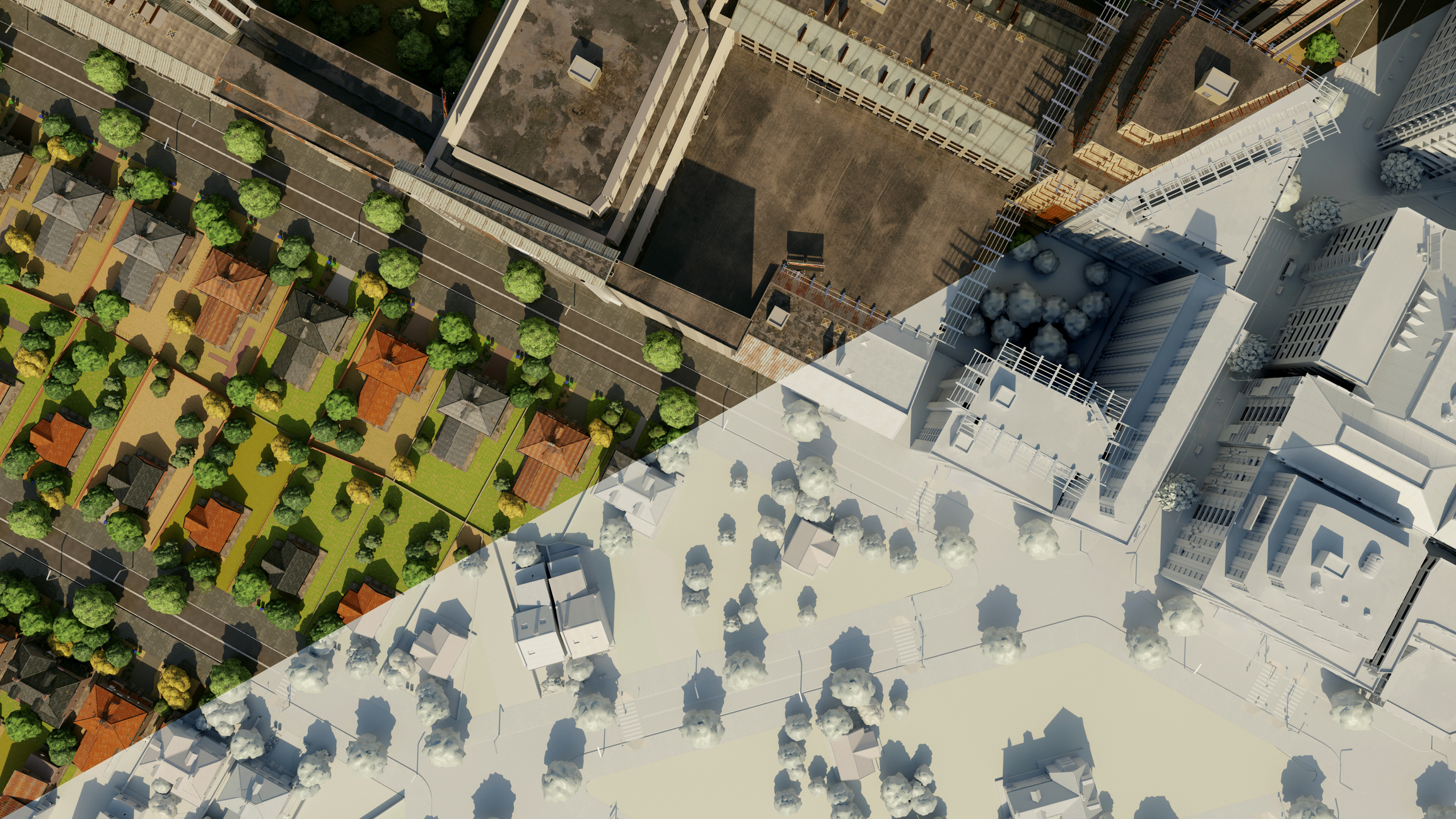
Traffic congestion, endless construction, flooded streets and power outages. For city leaders and residents alike, these disruptions are simply part of daily urban life. But an emerging tool, known as the urban digital twin, could help cities anticipate problems before they occur by allowing planners to simulate responses, stress-test infrastructure, and evaluate decisions before implementing them in the real world.
What Is an Urban Digital Twin?
An urban digital twin is a dynamic, data-driven virtual model of a real city. It uses AI analytics and combines 3D modeling with real-time data and information from sources such as IoT sensors, traffic cameras, satellite feeds, infrastructure databases, utility networks, and environmental data including weather systems and heat maps to create a continuously updated digital representation of the urban environment that mirrors infrastructure, movement and systems in real time. In other words, it is a living digital replica of a city.
Planners and engineers can use this virtual city to simulate how infrastructure, transportation systems and environmental conditions interact. This allows real-world scenarios to be tested in a digital space before any physical changes are made.
What Urban Digital Twins Are Not
An urban digital twin is not just a 3D map, static simulation or a visualization tool. Many cities already maintain detailed digital maps, but those models often capture only a snapshot in time. By contrast, digital twins are dynamic. A digital twin model integrates real-time data and can run simulations that show how a system might respond to changing conditions—whether that is a major storm, a new housing development or a shift in commuter patterns. A digital twin doesn’t simply visualize a city; it simulates it. It’s like a city-scale “mission control dashboard” or a SimCity model powered by real data.
From Reactive Cities to Predictive Cities
Digital twin technology opens the door to a major shift in how cities operate. Traditionally, urban management has been largely reactive. Roads are repaired after potholes appear. Drainage systems are upgraded after floods occur. Transit routes are adjusted after congestion becomes severe. Digital twins offer the possibility of moving toward a more predictive model of governance. They enable the testing of “what if” scenarios: What if rainfall exceeds historical records? What if a key bridge is shut down unexpectedly? What if electric vehicle adoption doubles within five years? What if a heat wave strains both water and electricity systems simultaneously?
By simulating thousands of potential issues, cities can identify vulnerabilities and test solutions before problems escalate. This represents a shift from reactive governance to scenario planning at scale. Whereas smart cities react, digital twins predict.
Technology Is Catching Up
Advances in cloud computing, artificial intelligence, sensor networks and high-resolution geographic data have made it feasible to process vast amounts of urban information in near real time. As a result, several cities around the world have begun experimenting with digital twin platforms and urban digital twins are already transforming how cities plan, manage risk and improve everyday life.
In Singapore, the government created a detailed 3D model of the entire city-state, simulating things like weather, traffic patterns and energy consumption, allowing planners to study everything from wind patterns around buildings to emergency evacuation scenarios.
Helsinki developed a virtual rendering of the city’s environment, operations and changing circumstances as part of a comprehensive initiative that aims to enhance Helsinki’s urban planning and management through digital twin technology.
And Zurich uses digital twin technology in transportation and infrastructure planning, protecting the city and saving money.
Smaller but no less ambitious projects are underway in the United States. Chattanooga built a digital representation of traffic signal infrastructure to examine mobility-related energy use. And Columbia University’s Data Science Institute initiated a project that aims to address traffic congestion and fatalities by creating a digital twin of New York City that enables monitoring of traffic patterns and adaption to changes in real time.
Companies such as Siemens, Dell, NVIDEA and others are providing technology to help integrate urban digital twins into city planning and development. For example, Siemens is leveraging digital twins to enhance sustainability and efficiency in urban development. Dell is exploring the potential of digital twins to create more reliant and sustainable cities. And NVIDEA provides a complete blueprint to build, test and operate AI agents in simulation-ready digital twins.
Why This Matters Now?
These efforts highlight why the concept is gaining traction now. Cities face mounting pressure from multiple directions: aging infrastructure, population growth and increasingly unpredictable climate conditions. Traditional planning methods, which are often based on historical data and lengthy timelines, can struggle to keep pace with these accelerating challenges.
Digital twins enable rapid, low-cost evaluation of complex systems compared with physical trial and error. Advances in AI-driven technologies and the falling cost of virtual testing further expand these possibilities. The potential benefits are substantial and include:
- reduced infrastructure costs
- enhanced emergency response planning
- optimized traffic and public transit systems
- greater climate resilience
- accelerated progress toward sustainable development
The technology also allows for greater improved transparency, enabling residents to visualize how proposed developments could affect their neighborhoods through simulation.
The Challenges Ahead
At the same time, digital twins raise important challenges. Building and maintaining a comprehensive digital model requires vast amounts of accurate and reliable data, as well as the computing power to process it. As a result, well-funded cities may be more likely to adopt advanced simulation tools while less-resourced communities fall further behind. Questions about privacy, cybersecurity and data ownership inevitably arise when cities rely on interconnected digital systems, and, as with any AI-reliant tool, there is also the risk of overreliance on models that may not fully capture real-world complexity. A simulation can inform decision-making but cannot replace sound judgement or community input.
A New Way to Plan
As urban systems become more complex and the stakes of infrastructure decisions grow higher, tools that allow cities to experiment virtually before taking physical actions are likely to become increasingly valuable.
For city leaders, planners, infrastructure developers and other proponents of the smart city concept, the rise of urban digital twins signals more than just a technological shift. It reflects a broader change in how cities can be studied, tested and improved in a virtual space before we alter the physical one. As a result, the question for many stakeholders may soon be less about whether digital twins will play a role in urban development and more about how to best integrate them into policies, partnerships and governance frameworks.
RELATED ARTICLES – SMART CITIES
With Wildfires at a Peak, “Firetech” Is Joining Smart City Lineups