 Gravel2Gavel Construction & Real Estate Law Blog





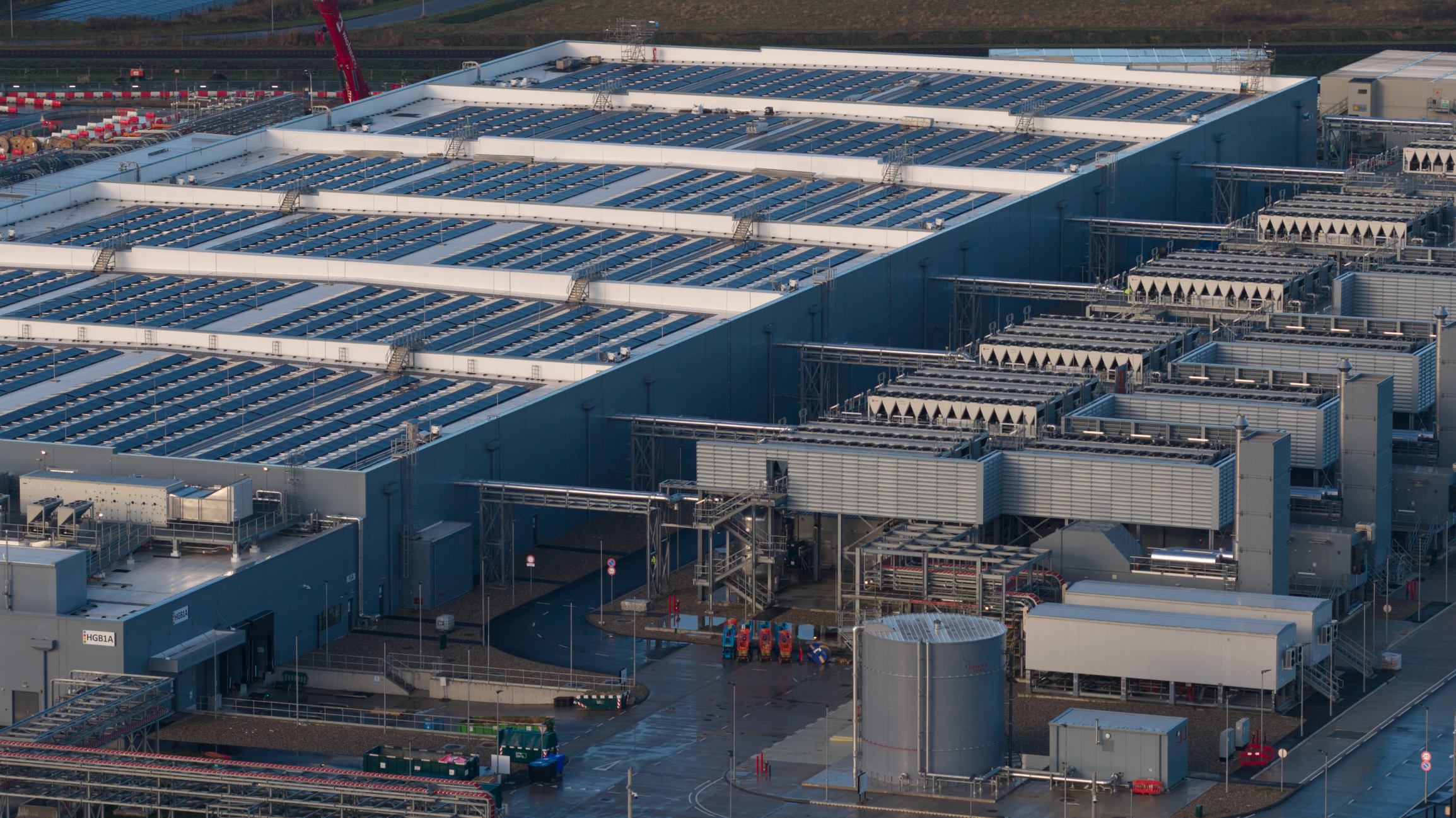 Data center construction projects are, to put it mildly, distinct. They differ from traditional construction in a host of manners, and are particularly distinctive because the value of the facility depends on unique measures of performance. A center that cannot meet uptime, cooling, redundancy or connectivity standards will not achieve its mission, whether or not the structure itself meets standard industry contract-form “substantial completion” or “mechanical completion” definitions.
Owners, developers, lenders, operators and hyperscalers—especially hyperscalers!—want it all. They seek favorable and stable pricing, accelerated delivery and sophisticated components, all of which are evolving in “real project time.” Standard construction contract forms deserve extensive modifications to align clauses with expectations, with a heightened focus on systems integration, commissioning, and allocation of special risks. This article details customized considerations for drafting, negotiating and administering data center design and construction agreements.
The Integrated Systems Context
Digital infrastructure facilities, driven by artificial intelligence workloads, depend critically on sophisticated procurement of power, cooling, connectivity and components. Constraints such as utility capacity and interconnection limits, long-lead equipment backlogs and labor shortages are routine, especially in the regions where data center construction is most intense.
Most large infrastructure projects are delivered these days using either design-build or engineering, procurement and construction contracting structures (collectively, EPC). Owners and their stakeholders value EPC for the single point of responsibility. Unlike traditional design-bid-build delivery, EPC permits overlapping design and construction, facilitating early procurement. They are not panaceas, though. The design professional works for the contractor instead of the owner, and the price and schedule must be fixed when the time is right. In a perfect world, this is when designs have evolved and key procurement risks have been bought out. (We do not live in a world that is always close to perfection.) See the Pillsbury white paper on Gigaprojects and our comparison of EPC and EPCM structures for detailed descriptions of these considerations.
Completion = Operational Readiness, Not Just Occupancy
The laser-beam focus for any data center EPC should target operational performance. In ordinary commercial construction projects, “substantial completion” victory is declared when the owner can occupy the building and individual mechanical systems are tested, even if punchlist work remains. That standard is inadequate for data centers, where completion should instead be tied to total operational readiness, requiring every integrated system to perform to specification under realistic load conditions.
In a data-center contract, generic “substantial completion” language should be set aside in favor of well-defined milestones. Criteria may include, in no particular order: integrated systems; redundancy and “failover” testing; energization and frequency regulation testing; and connectivity testing in accordance with quantitative standards. These requirements should not be framed as aspirational goals, or defer generally to “industry standards.” Specifics such as N+1 or 2N redundancy systems, Power Usage Effectiveness (PUE) targets, and uptime levels should be considered.
Consequences for failure to achieve metrics should be practical and enforceable. Liquidated damages for schedule delay and nonperformance look great in an owner’s first draft of a contract; alas, they need to be negotiated, agreed upon and implemented with savvy counterparties, who will propose caps, carveouts and veiled warnings of price increases. Furthermore, some aspects of performance depend on items outside the EPC scope, such as owner-furnished equipment, utility hookups and third-party systems. Thus, cooperative responses to emergent problems are needed, necessarily involving all potentially responsible parties—the owner included.
Pricing Structures and Cost Management
The digital infrastructure boom has strained all kinds of input markets. Traditional lump-sum contracting is increasingly difficult when pricing for electrical equipment, copper and labor can fluctuate dramatically. Utility interconnection constraints, power-delivery uncertainties and entitlement challenges can create additional schedule and cost risks that may not be within the contractor’s control. As a result, many jobs now use target prices, guaranteed maximum prices, or hybrids with elements of fixed pricing. For any price structure with “teeth,” the drafter’s attention should be trained on the trio of moving parts—allowances, contingencies and escalations.
Allowances should be tied to identifiable scope items, not serve as placeholders for incomplete designs or matters within the contractor’s sole control. Contingencies should specify who controls drawdowns and when funds may be used. Escalations can be based on commodity price or labor wage indices, subject to collars like caps or locked-in time periods. Contracts should also clearly specify assumptions regarding utility availability, interconnection milestones and other power-related prerequisites, as well as the parties’ respective entitlement to schedule relief or compensation if those assumptions prove inaccurate.
Owner-Furnished Equipment
Hyperscalers often direct procurement of their preferred equipment or systems to their preferred vendors. This is far more prevalent in data center projects than others, where owner-furnished equipment is typically limited to fixtures or finishes. Owner-furnished equipment provisions should address allocation of coordination, delivery, receipt, storage, installation, integration, and warranty roles and risks. The data center agreement should also address entitlement to schedule relief and compensation resulting from late delivery, defective equipment, incomplete vendor information or integration failures associated with owner-furnished equipment.
Commissioning and Integrated Testing
Data center commissioning is not just spending a long weekend testing individual components. Integrated validation is essential because the practical exposures often reside at the crevices, the interfaces between systems. Power, cooling, controls and connectivity must function seamlessly under simulated operational conditions. On top of normal experience, commissioning should stretch to cover failover scenarios, redundancy validation and peak-load conditions.
Consequences of problems encountered during commissioning should be practical and staged. Before employing contractual “sticks” such as damages, the contract should accommodate retesting and reperformance rights during crisply defined cure periods, and require the involvement of all potentially responsible parties.
Many times, portions of a data center are to be turned over before overall commissioning. The agreement should address access, security, operational coordination, liability risks, and procedures governing and mitigating concurrent and potentially interfering activities during this period of overlap.
Technology Evolution and Change Management
The digital infrastructure industry is rapidly evolving, not just from project to project but also in the real time of a given contract’s lifetime. An initially conceived facility may see material modifications before completion because of evolving artificial intelligence workloads, cooling technologies, rack densities or tenant requirements. The construction contract should treat technology-driven modifications as expected, not extraordinary.
Predetermined unit rates, with all extended-overhead charges included, can reduce disputes while the parties negotiate a ceiling on their respective exposures to a change. Modifications stemming from evolving owner requirements may deserve different treatment than those resulting from changes in the input markets such as upgrades or unavailability of equipment or systems. If equipment or system substitutions become necessary because of supply chain constraints, the contract can define whether the substitute must be strictly equivalent or merely commercially reasonable. Modules for discrete expansions, such as additional racks, can be handled as a second phase without requiring fundamental changes to the first phase.
Cybersecurity and Physical Safeguards
Heightened security is a business essential and legal mandate. Traditional construction contracts rarely address cybersecurity, including only basic physical security provisions such as site fencing and, maybe, access badges. Data center projects require far more: The cybersecurity and physical security provisions of the construction contract must be consistent with the sponsors’ obligations. NIST (National Institute of Standards and Technology), ISO (International Organization for Standardization) or other specifications can be referenced and applied. These and other obligations should be flowed down from the prime contractor into vendor agreements and subcontracts.
Temporary systems, open network ports, default credentials and uncontrolled site access can create significant vulnerabilities before turnover occurs. Contracts should therefore impose credential controls, secure configurations and documentation requirements throughout construction and commissioning.
Risk Allocation
Standard consequential damages waivers, indemnity clauses and liability caps must be examined in light of unscheduled downtimes and other exposures that are unique to data centers.
Owners frequently seek broad remedies tied to lost revenue, hyperscaler service level agreement (SLA) penalties, or tenant claims. Yet those same owners and their stakeholders seek favorable price and schedule commitments. Contractors naturally resist these impositions, seeking limits on their liability and also consequential damages waivers. This battle should be expected. The negotiators on both sides should come to the table armed with well-defended positions on carveouts and collars. Particular attention should be paid to the interaction between performance guarantees and consequential damages waivers, as owners frequently seek meaningful remedies for failures affecting uptime, redundancy, cooling capacity or power availability.
Insurance should viewed with data centers specifically in mind. Products include not only builder’s risk property and commercial general liability coverage, but also professional liability, cyber and excess policies. Owner-controlled insurance programs and contractor-controlled insurance programs (OCIPs and CCIPs) covering liability risks for all onsite contractors and subcontractors should be evaluated.
Contract Administration and Dispute Resolution
As detailed in Gigaprojects, the successful project starts with good drafting but ultimately depends on good administration by trained staff and legal advisers on both sides of the contract. Contemporaneous documentation is critical. Disputes often involve overlapping causes such as utility delays, procurement disruptions, design evolution and commissioning failures. Without disciplined recordkeeping, parties may struggle to establish causation years later.
Structured escalation provisions can help reduce formal disputes by requiring executive-level negotiations before claims escalate to arbitration or litigation. Consistency should be sought among the forum and joinder clauses in construction, services and data-center tenancy agreements.
Effective data center construction agreements will anticipate the integrated aspects of these complex facilities. Performance standards should be specific, commissioning tests should be measurable, responsibility allocations should be crisp, assumptions should be express, and remedies should be practical.
For more information, please contact the authors.
RELATED ARTICLES
Introducing the Updated 2026 Pillsbury Guide to Data Centers